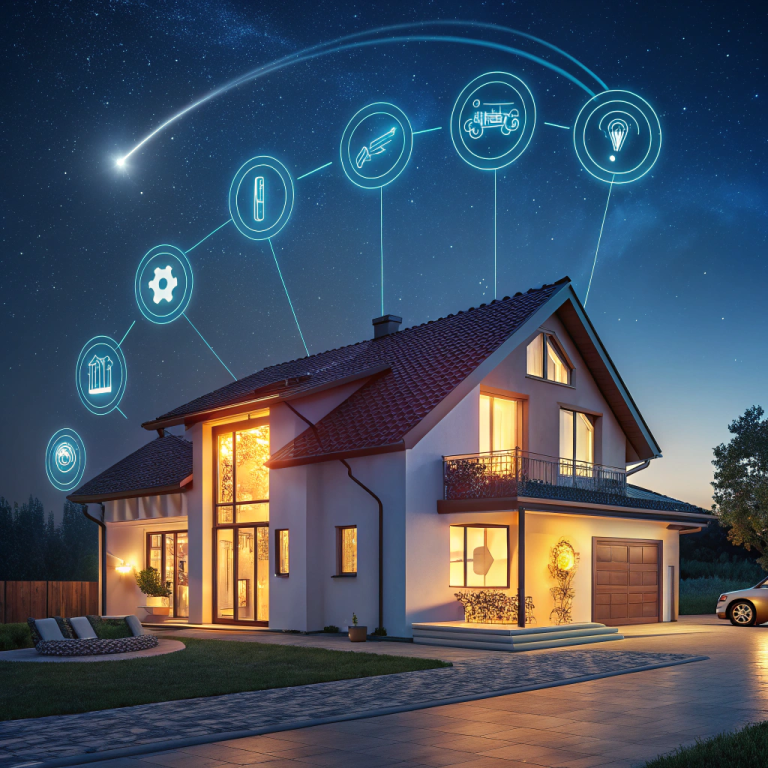
The Role and Impact of Artificial Intelligence in Smart Homes | How AI Is Shaping the Future of Living
In the digital era, Artificial Intelligence (AI) has become a driving force behind many innovations — from voice assistants to autonomous vehicles. One of its most exciting applications is in smart homes, where AI is transforming how we live, work, and interact with our surroundings. In this article by Sitekadeh, we’ll explore the role, benefits, and challenges of using AI in smart homes, and how this technology is redefining the concept of modern living.
What Is Artificial Intelligence and How Does It Work in Smart Homes?
Artificial Intelligence refers to the ability of machines and software to analyze data, learn from user behavior, and make intelligent decisions without direct human input. In smart homes, AI integrates with connected devices through the Internet of Things (IoT), enabling them to communicate, automate routines, and adapt to homeowners’ preferences.
For example:
Smart thermostats like Nest learn your daily routine and adjust the temperature automatically.
Intelligent lighting systems turn lights on or off based on presence and natural light levels.
Voice assistants such as Alexa or Google Assistant respond to commands and manage connected devices.
Benefits of Using AI in Smart Homes
1. Energy Efficiency and Cost Savings
AI helps reduce energy waste by analyzing patterns of electricity, gas, and water usage. By learning when and how you use energy, smart systems can optimize consumption — saving both money and the environment.
2. Enhanced Security and Safety
AI-powered security cameras can recognize faces, detect unusual activity, and alert homeowners instantly. Some systems even predict potential security risks based on behavioral patterns.
3. Greater Comfort and Convenience
From playing your favorite playlist when you enter a room to brewing your morning coffee automatically, AI-powered devices make daily life smoother and more enjoyable.
4. Personalized Living Experience
AI tailors the home environment to each resident’s preferences — adjusting lighting, temperature, and entertainment according to individual habits. The result? A home that feels uniquely yours.
The Future of Smart Homes with Artificial Intelligence
As AI continues to evolve, the future of smart homes looks even more intelligent and interconnected. Upcoming trends include:
Deeper IoT integration between all devices
Cloud-based AI processing for faster decision-making
Emotion recognition to adjust home environments based on mood
Full remote control via smartphones and voice commands
In the near future, your home won’t just respond to your commands — it will anticipate your needs before you even express them.
Ethical and Security Challenges
While AI offers endless possibilities, it also raises important concerns:
Privacy Issues: Smart devices collect vast amounts of personal data, which must be securely stored and managed.
Cybersecurity Risks: Connected systems can be vulnerable to hacking if not properly protected.
Overdependence on Technology: Relying too much on automation might reduce human initiative and problem-solving skills.
Conclusion
Artificial Intelligence is revolutionizing the way we interact with our homes, turning them into intelligent, energy-efficient, and secure environments. As AI becomes more advanced, smart homes will continue to evolve — making daily life more comfortable, predictive, and sustainable.
If you’re planning to create a website for smart hometechnology or AI solutions, the team at Sitekadehcan help you design a modern, SEO-optimized platform that attracts the right audience and grows your business online.